wheel of life
How to Rate Your Life Balance: The Wheel of Life Explained
The Wheel of Life gives you an instant picture of where your life is thriving and where it's neglected. This guide covers how to do it right and what to do with the results.
What Is the Wheel of Life?
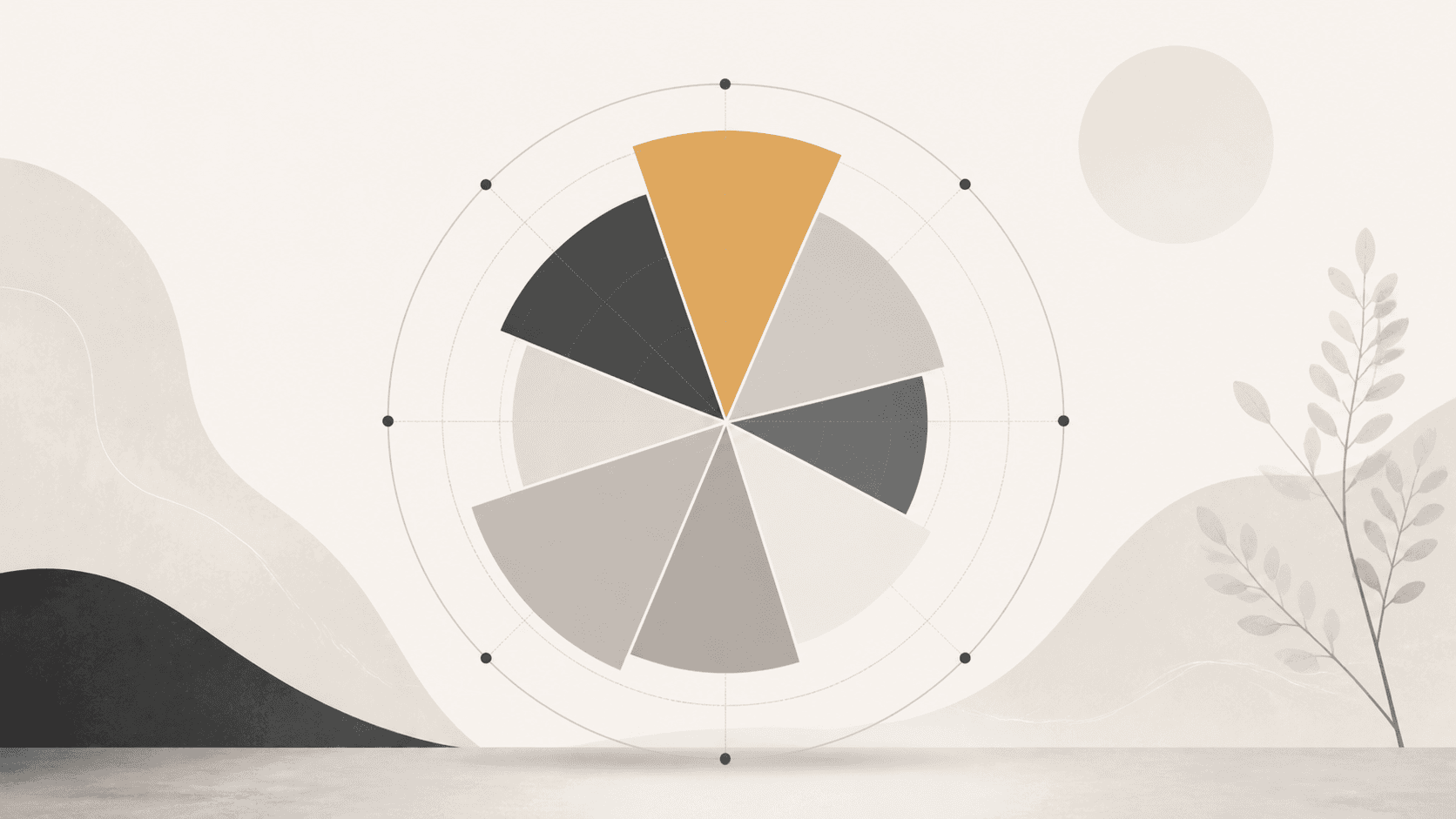
The Wheel of Life is a coaching and self-reflection tool that visualizes how satisfied you are across each major dimension of your life. It's represented as a circle divided into segments, typically eight, each representing one life area. You rate your satisfaction in each segment on a scale of 1 to 10, then shade in the wheel to see the shape of your life balance at a glance.
The insight is immediate and visual: a perfectly round wheel rolls smoothly. A lumpy wheel, some segments at 8 or 9, others at 2 or 3, wobbles. That wobble is felt as a general sense of dissatisfaction or friction that's hard to name precisely. The Wheel of Life makes it nameable.
The Eight Life Dimensions
| Dimension | What It Covers | Signs of a Low Score |
|---|---|---|
| Health | Fitness, nutrition, sleep, energy | Fatigue, illness, no exercise for weeks |
| Work / Career | Output quality, career direction, job satisfaction | Reactive all day, no meaningful progress |
| Mind | Mental clarity, emotional wellbeing, journaling | Anxiety, mental fog, nothing to look forward to |
| Relationships | Partner, family, friendships, community | Weeks without meaningful connection |
| Finances | Income, savings, spending awareness | Avoiding checking accounts |
| Learning | Skills, books, courses, curiosity | Haven't learned anything new in months |
| Rest | Recovery, recharge, play, time off | Can't remember the last time you felt refreshed |
| Purpose | Values, meaning, long-term direction | Going through motions without knowing why |
How to Complete the Wheel of Life
Rate each dimension honestly (1–10)
1 = completely neglected or deeply unsatisfied; 10 = thriving, nothing to change. Rate where you actually are, not where you think you should be or where you were last year. The exercise only works with honest current-state ratings.
Look for the gaps and the contrasts
After rating, note: Which dimension has the biggest gap between where you are and where you want to be? Which dimensions are pulling everything else down? Which areas are you consistently high in, and is that balance being maintained at the expense of the lower areas?
Identify your one priority dimension
Don't try to improve all eight dimensions at once. Choose the one dimension where a score improvement would most change your overall wellbeing. Usually it's the one you've been avoiding looking at. Start there.
Set one concrete action per low-scoring dimension
For each dimension you want to improve, define one specific action you'll take this week, not a goal, an action. 'I will call my mother on Sunday' is an action. 'Improve relationships' is not. The action should take under 30 minutes and have a clear completion point.
Prefer to do this interactively? Xenith's free Wheel of Life assessment walks through all 8 dimensions and charts your results automatically, no signup required.
When to Do It
A monthly Wheel of Life assessment gives you a meaningful data point without the noise of day-to-day variation. At the start of each month, rate each dimension and compare to last month. A dimension trending down over two consecutive months is an early warning signal worth addressing before it becomes a crisis. A dimension trending up confirms that what you've been doing is working.
Xenith's Life Dimensions feature is a digital Wheel of Life with per-dimension tracking, weekly score history, and visual trend lines, so you can see how your balance evolves over time, not just in a single snapshot.
Frequently Asked Questions
Does the wheel of life actually work?
As a diagnostic and conversation tool, yes, it's highly effective. The visual immediately surfaces neglected areas that stay invisible in day-to-day life. As a standalone change tool, it's limited, the wheel shows you what to address, but you still need specific actions and a review cadence to make actual progress. Pair it with a weekly review and concrete actions for lasting impact.
What's a 'good' wheel of life score?
Balance matters more than absolute numbers. A person scoring 6 across all eight dimensions has a smoother wheel than someone scoring 9 in three dimensions and 2 in five others, and likely feels better despite lower absolute scores. The goal is steady, balanced progress, not perfection in any single area.
Can I customize the dimensions?
Yes, the eight standard dimensions work for most people, but you can add or replace dimensions that matter to your specific life. Common additions include 'spirituality', 'creative expression', 'community', or 'environmental/sustainability'. Remove dimensions that genuinely don't apply and add ones that do.
Put it into practice in Xenith
Keep reading
The Weekly Review System: A 30-Minute Template for Clarity and Balance
Stop losing weeks to drift. This weekly review system takes 30 minutes and gives you a clear signal on where your life is and where it's going, every seven days.
What Is a Life OS? The Complete Guide (2026)
A life OS is the system layer beneath your goals, habits, and daily work. This article explains what it is, why scattered tools can't replace it, and how to design yours.
How to Track Your Life Goals (The Right Way)
Goal tracking fails when you track the wrong things. This guide shows what to measure, how often to review, and how to build a system that keeps long-term goals from disappearing into January.
What Is Life Tracking? (And How to Actually Start)
You can't see a pattern from inside a single day. Life tracking is what turns "I feel like I've been off lately" into an actual answer. Here's what it is and how to start small.