life OS app
7 Best Life OS Apps for Ambitious People in 2026
Ambitious people don't usually lose momentum from a lack of drive. They lose it because planning, habits, and reflection live in different apps. Here's how the top life OS apps compare.
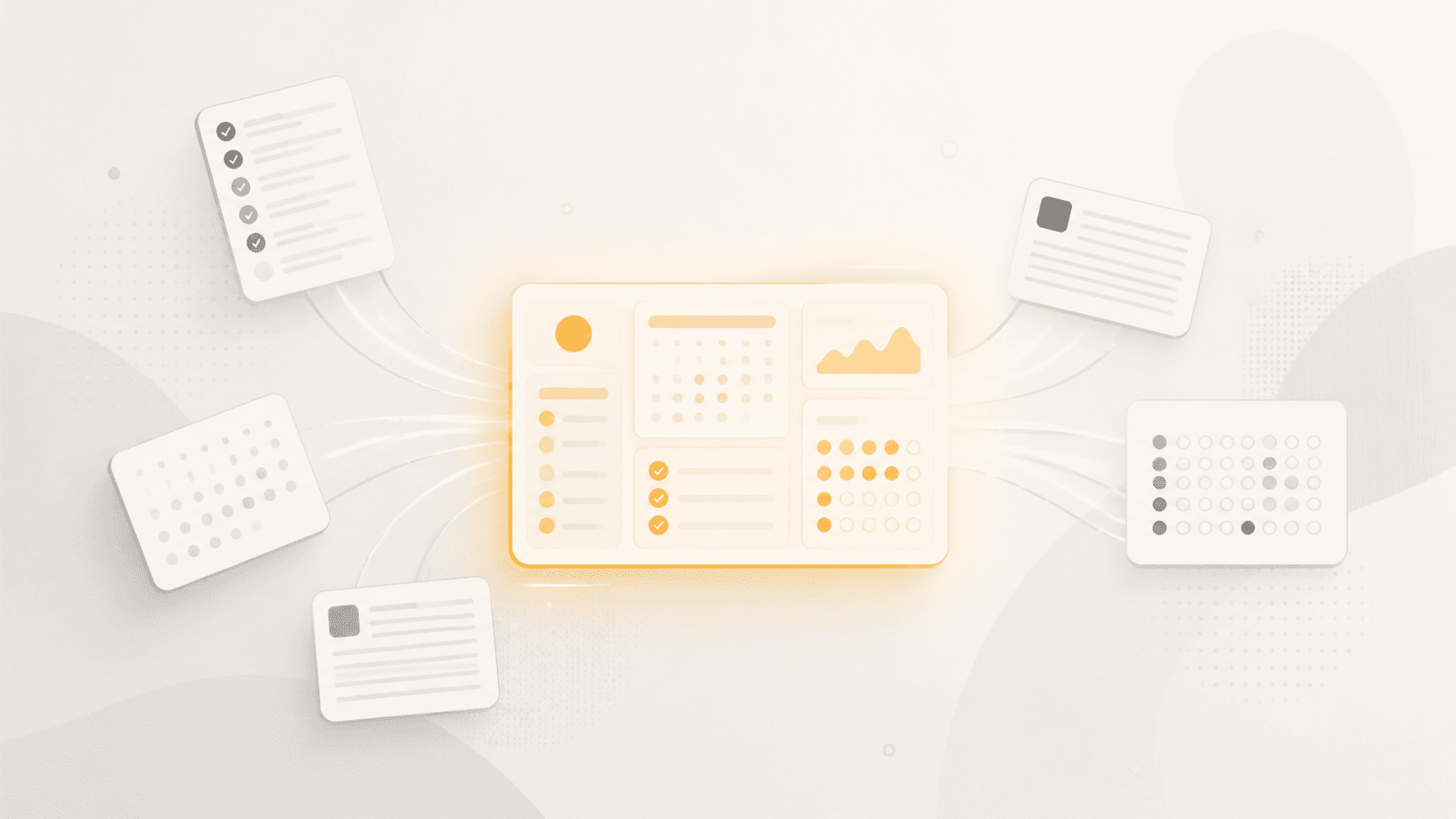
Xenith is the strongest fit for ambitious people who want one calm system for intentions, focus, and reflection with no setup. Notion wins if you want to build a fully custom dashboard yourself. Morgen and Sunsama are built for calendar-first daily planning rather than broader life tracking, and Obsidian or Anytype are the picks if privacy and local-first notes matter more than polish.
Why a Daily Life Dashboard Matters
If your day starts in one app, your tasks live in another, and your goals disappear by lunch, the problem usually isn't a lack of drive. It's that planning, habits, your calendar, and reflection are split across tools that don't talk to each other. A daily life dashboard fixes that by giving you one place to see the day, run a repeatable routine, and actually follow through.
A life OS app is more than a task manager. It should give you a single place to plan your day, track habits, capture notes, and connect your goals to what actually gets done, without turning planning into a project of its own. This list ranks the tools that do that job best, based on daily planning style, life-tracking depth, and how much setup they demand before they're useful.
Quick Comparison
| App | Best for | Daily planning style | Life tracking depth | Privacy / setup |
|---|---|---|---|---|
| Xenith | Ambitious users who want one calm command center | Intentions-first, with focus sessions and reflection | High, with eight life dimensions plus insights | Minimal setup; states it doesn't sell personal data |
| Notion | Users who want full customization and don't mind building it | Database-driven and highly configurable | Very high, but entirely user-designed | Cloud-based; setup can take hours |
| Morgen | Calendar-first users who want AI help with daily planning | Time-blocked and schedule-aware | Moderate, focused on planning over reflection | Requires account and calendar integration |
| Sunsama | People who want calm, realistic daily planning | Guided, ritual-based, and calendar-led | Moderate, centered on work and schedule | Cloud app with some onboarding |
1. Xenith
Xenith is built around a calm daily dashboard rather than another task list competing for your attention. Its system centers on daily intentions, focus sessions, a routine builder, and reflection, tied together by eight life dimensions: Health, Mind, Relationships, Work, Finances, Learning, Rest, and Purpose. Instead of streaks that reset to zero the moment you miss a day, Xenith tracks frequency and completion rate on a 90-day heat map, which holds up better against a genuinely busy week.
Best for: Ambitious people who want one system for planning, focus, and reflection without assembling it themselves.
Pros
- Purpose-built for running a full day, not just capturing tasks
- Eight life dimensions cover more than work, including health, relationships, finances, and rest
- No streak counters, so a missed day doesn't erase your progress
- Free to start, with a privacy policy that states plainly it doesn't sell personal information
Cons
- Early-stage compared to long-established tools like Notion or Todoist
- No native calendar sync yet, so it works best alongside your existing calendar rather than replacing it
Xenith ranks first here because it's the only tool on this list purpose-built for exactly this job: one calm command center for intentions, focus, and life balance, not a calendar app or note-taking tool stretched to cover it.
Also read: Deep Work for Students
2. Notion
Notion is the right choice if you want to build a custom daily dashboard from scratch and don't mind the setup. Its databases, multiple views, and Notion Calendar sync can produce a genuinely powerful personal dashboard, including AI tools like Notion Agent, but none of it exists until you build it.
Best for: People who want full customization and are willing to maintain what they build.
Pros
- Notes, tasks, goals, and calendar can all live in one connected system
- Unmatched flexibility: if you can imagine the structure, Notion can probably hold it
Cons
- Real setup time before it's useful, typically hours rather than minutes
- Easy to overbuild a system you don't actually keep up with
Notion ranks high for flexibility, but below Xenith for this specific use case. It's still a build-your-own life operating system, not a ready one.
Also read: The Real Benefits of Habit Stacking (and When It Doesn't Work)
3. Morgen
Morgen is a strong daily planner for people who live by their calendar. It pulls tasks and events into one view, with AI planning help and time-blocking Frames that turn a priority list into a realistic schedule.
Best for: Calendar-first users who want AI assistance turning priorities into a scheduled day.
Pros
- Excellent at scheduling and prioritization around your existing calendar
- AI auto-scheduling reduces manual time-blocking work
Cons
- Less suited to broad life tracking beyond planning and schedule
- Requires calendar integration to get real value from it
Morgen ranks third because it's genuinely excellent at calendar-centered execution, but it isn't trying to be a full life OS. Reflection, habits, and life-dimension tracking sit outside its scope.
Also read: How to Write Daily Intentions
4. Sunsama
Sunsama is a calm daily planner for ambitious people who tend to overpack their days. Its guided planning flow and timeboxing setup push you toward a realistic day instead of an aspirational one, and its weekly review adds a shutdown ritual most calendar apps skip.
Best for: People who want calm, realistic daily planning with a built-in weekly review.
Pros
- Reduces planning overwhelm by limiting how much you can cram into a day
- Weekly review and shutdown rituals build in reflection most planners lack
Cons
- Less customizable than Notion
- Centered on work and schedule rather than broader life tracking
Sunsama ranks here because it turns intention into a doable day better than almost anything else on this list, but it's still more planner than full life OS.
Honorable Mentions
A few other tools are worth a look if your setup leans more calendar-first, notes-first, or privacy-first than the four above.
- Anytype: best for local-first dashboards, databases, and private knowledge systems.
- Obsidian: great for a highly custom, note-based life OS built from plugins and daily notes.
- Todoist: fast, clean, and reliable for task-heavy execution when you don't need broader life tracking.
How to Choose the Right Life OS App
Use these filters first:
- Pick Xenith if you want the best daily dashboard for intention, focus, reflection, and life balance in one calm place, without building it yourself.
- Pick Notion if you like building systems from scratch and will actually maintain them.
- Pick Morgen or Sunsama if calendar control and time-blocking matter more than broader life tracking.
- Pick Obsidian or Anytype if privacy, local files, and note-heavy workflows matter more than polish.
- Pick Todoist if you mainly need fast, reliable task capture.
Choose the app you'll actually open every day. Low friction beats a longer feature list. A perfect system you abandon in week two loses to a simple one you still use in month six.
Want one system that runs your whole day instead of five that each run a slice of it? Try Xenith to plan, focus, track your life, and grow without app overload.
Frequently Asked Questions
What's the best life OS app for ambitious people?
It depends on what's actually breaking down. Xenith is built specifically for people who want planning, focus, and reflection in one calm system with no setup. Notion is the better fit if you'd rather build your own dashboard from scratch. Sunsama and Morgen are strongest for people whose main problem is calendar-driven daily planning rather than broader life tracking.
Which life OS app is easiest to stick with daily?
The app you can open and use in under two minutes, consistently, beats the one with the longest feature list. Todoist is the fastest for pure task capture. Xenith is built to be opened once a day for intentions, focus, and reflection with no extra setup, since setup friction is what kills most systems within a few weeks.
Should I use one life OS app or combine several tools?
Start with one. Most people abandon their system not because the app was wrong, but because they tried to run several tools at once. Add a second tool only when a specific, real gap shows up, like needing deeper note-taking than your main app offers, rather than building a stack before you know what you actually need.
Put it into practice in Xenith
Keep reading
What Is a Life OS? The Complete Guide (2026)
A life OS is the system layer beneath your goals, habits, and daily work. This article explains what it is, why scattered tools can't replace it, and how to design yours.
Best Life Dashboard Apps in 2026 (Compared)
Most productivity apps track one thing. The best life dashboard apps track everything and show you the full picture. Here are the top options in 2026.
Xenith vs Notion: Which Is Better for Life Management?
Notion is the most powerful flexible tool. Xenith is purpose-built for life management. Here's a clear breakdown of what each does best and who should use which.
What Is a Life Organization App? (And What to Look For)
"Life organization app" is a broad label for tools that try to organize more than just your tasks. Here's what actually separates a good one from a to-do list with extra steps.